AI Compliance Monitoring Is Ending the Era of the 3% Call Review
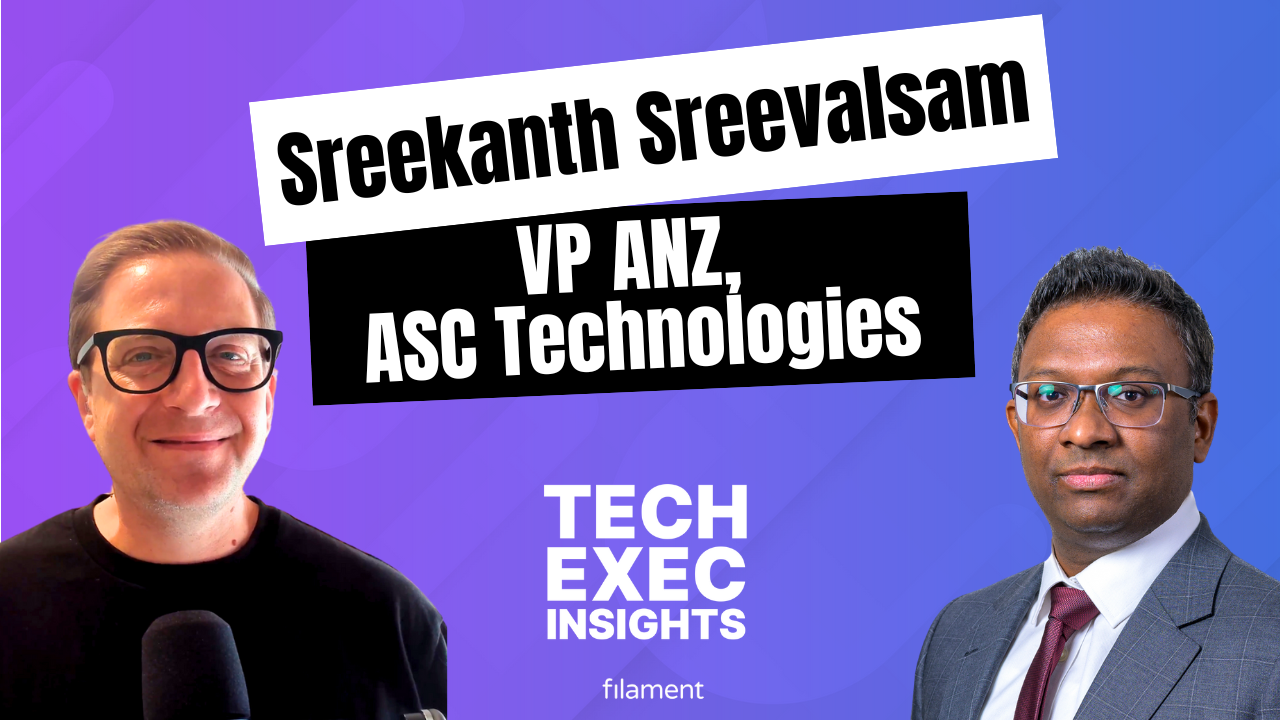
Most financial services organisations review fewer than one in thirty customer calls. That number is not a resourcing failure — it is the ceiling of what human-led compliance monitoring can deliver. Sreekanth Sreevalsam, VP of ANZ at ASC Technologies, argues that AI compliance monitoring does not just raise that ceiling — it removes it. Before reading further, watch the full conversation: Tech Exec Insights — Sreekanth Sreevalsam.
ASC Technologies is a German-headquartered software company with over 60 years of experience in compliance recording, AI analytics, and archiving. Its cloud-native platform supports Microsoft Teams, Zoom, and other unified communications environments, and is deployed across financial institutions, contact centres, healthcare, and public safety organisations globally. ASC serves regulated industries that require auditability, data quality, and explainable AI — the exact standards now being formalised by Australian regulators including APRA and ASIC.
From Keywords to Context: How AI Changes Compliance Monitoring
For most of the 2010s, compliance monitoring in financial services relied on keyword lists. Regulators wanted to know if traders said ‘guarantee’ or ‘front-run.’ Systems were built to catch those words — and little else.
The problem is that people stopped talking like compliance dictionaries. Slangs, indirect phrasing, and even emojis now carry the same risk as the old flagged terms. Keyword-based systems either generate noise — flagging irrelevant conversations — or miss real risk entirely.
Sreevalsam describes the shift AI makes: “AI shifts the focus from keywords to context. It understands who is speaking, what their role is, who the counterparty is — and it understands intent, not just words.”
That distinction matters in practice. A trader joking with a colleague reads very differently from the same trader advising a client. AI can tell the difference. Traditional keyword systems cannot.
100% Call Coverage: What It Means in Practice
The 3% figure is not a rounding error. Sreevalsam’s research found that in most organisations, only 3 in every 100 customer calls are ever reviewed by a human. That means 97% of interactions — complaints, advice conversations, disputes — go completely unexamined.
The analogy he uses is direct: a doctor who reviews only 3% of a blood test report is not doing their job. The same logic applies to compliance teams sampling calls at random.
AI coverage changes the math. With AI compliance monitoring, 100% of calls — including emails, video meetings, and chat — can be analysed at scale. But the output is not a larger pile of flagged content for humans to review. The system surfaces patterns and risk signals, presenting only the interactions that genuinely warrant human attention — typically around 5%.
The result is a compliance function that spends its time on decisions, not on sampling logistics.
Compliance as Intelligence: The Business Case Beyond Tick Boxes
Sreevalsam makes a pointed distinction between recording calls because regulators require it and treating those recordings as data assets.
“You have to move the conversation from ‘have you done your call recording?’ to ‘what are we learning from that recorded data?'”
The intelligence available inside that data is substantial. Patterns linked to high customer satisfaction. Early indicators of financial distress. Training gaps visible at scale across an entire contact centre workforce. APRA’s prudential standards CPS 230 and CPS 234, released in 2024, now require boards to demonstrate they are learning from operational data — and customer interaction recordings are squarely in scope.
For MSPs and technology partners, this repositions the conversation. Selling a compliance recording licence becomes a different pitch when the same platform can surface revenue insights, reduce churn, and evidence regulatory learning obligations.
What’s Holding Compliance Teams Back from AI Adoption
The barriers are rarely technical. Sreevalsam identifies three patterns he sees consistently.
First, compliance and technology leaders talk past each other. Their desired outcomes are misaligned — one wants speed to deploy, the other needs certainty. Without a shared framework, AI projects stall.
Second, there is genuine concern about black-box AI: systems that produce outputs without explaining how they got there. Regulators in Australia have been clear that auditability matters. Any AI solution operating in a regulated environment needs to show its reasoning, not just its conclusions.
Third, data sovereignty. Sreevalsam is direct: when a solution is cheap, there is a reasonable question about where the data goes and whose models it is training. Vendor due diligence — including sub-processor arrangements — is not optional.
His practical advice: start with quick wins tied to a specific outcome. Pilot projects without success criteria are the most common failure mode in AI adoption. Frameworks like the NIST AI Risk Management Framework and ISO AI management standards give compliance and technology teams a common language to work from.
From Recording to Revenue: Making the Shift
The shift Sreevalsam describes — from compliance as a cost centre to compliance as a source of intelligence — is also a go-to-market opportunity for technology partners. But capturing it requires more than technical capability. It requires being able to translate between regulatory language and business outcomes, and to connect AI tools to the specific frameworks FSI organisations are now required to meet.
Filament works with B2B technology organisations to build the content and positioning that makes those conversations possible — helping partners move from product-led pitches to outcome-led differentiation. [LINK: relevant Filament service or capability page]
Talk to Filament
If your organisation is navigating AI adoption in a regulated environment — or you are a technology partner trying to articulate the value of compliance intelligence to your clients — a focused strategy conversation is a useful starting point. No pitch. No obligation. Just a direct conversation about where the gaps are and what is worth addressing first.