
B2B Sales Enablement:
Turn GTM strategy into sales conversations that close
Most B2B tech companies invest heavily in GTM strategy and positioning. Then hand a slide deck to sales and hope for the best.
The result: Sales reps improvise. Messaging fragments. Deals stall or go sideways.
Filament builds structured sales enablement systems that translate your GTM strategy into consistent conversations, faster deal cycles, and better win rates.
Most B2B tech sales teams are under-equipped
Here's what we see consistently across B2B tech organisations.
Buyers arrive informed. Reps arrive unprepared. Strategy doesn’t fail. It’s the execution that fragments it.
- Messaging is sharp in leadership decks but unclear in actual sales conversations
- Reps default to features instead of value
- Objections get handled differently by different people on the same team
- New offers launch without structured, repeatable enablement
- Sales assets are scattered across folders, formats, and inboxes

Strategy doesn’t fail in the boardroom.
It falls short in the first sales meeting
after the strategy gets handed off.
Today’s B2B tech buyers complete significant research before engaging any sales rep. When your rep finally gets in the room, they’re already being benchmarked against the buyer’s expectations.
Improvised positioning doesn’t survive that moment.
If it's not changing how your reps sell,
it's not enablement
Sales enablement isn’t a document library. It isn’t a training day. It’s the system that shapes how your team behaves in the moments that determine whether you win or lose deals.
Done properly, sales enablement should reshape behaviour in meetings, not just sit in a folder.
It it’s not shaping behaviour in sales meetings, it’s just collateral.
Give reps a clear narrative structure for every type of conversation
Arm them with competitive positioning that holds up under pressure
Anticipate and address objections before they surface in a deal
Align pricing tiers with value conversations, not just feature comparisons
Reduce improvisation across the entire sales team
Shorten ramp time when you launch new solutions or enter new segments
Sales methodology: the backbone of effective enablement
A strong sales methodology provides reps with a clear, repeatable framework for navigating the sales process from first contact to closed deal. When methodology and enablement work together, every rep knows exactly how to engage potential customers, deliver relevant content, and move opportunities through the cycle efficiently.
Streamlined process
Reps follow a proven path, reducing confusion and inconsistency.
Shorter cycle length
Structured steps help move potential customers through the buying journey faster.
Improved performance
Consistent execution leads to higher win rates and better sales outcomes.
Relevant content delivery
Sales teams know when and how to use enablement resources to address buyer needs at each stage.
How we build your sales enablement system
We don’t start with templates. We start with your strategy. Filament absorbs your specific GTM context first — your ICP, offer design, pricing structure, and the sales motion your team actually runs. Everything we build from that point is structured to fit how your deals work in practice, not how they’d work in theory.
Step 1: Absorb
Understand your strategy, ICP, offer design, and pricing structure.
Clarify the internal sales motion.
Identify competitive pressure points.
Gather and analyse customer and sales data.
Step 2: Structure
Clarify the buyer narrative.
Define the value hierarchy.
Align tiers and differentiation.
Map objection pathways.
Step 3: Bring to life
Convert positioning into a usable Sales Playbook and tools.
Shape conversation flows.
Develop enablement materials in formats your team will actually use.
Step 4: Deploy
Deliver the structured asset ecosystem.
Support internal rollout and training.
Prepare collateral for future customer-facing use.
What we deliver: Sales enablement outputs
built for your GTM motion
Every engagement is scoped to your specific sales context. We shape output formats depend on what your team needs to have productive conversations and win deals.

Sales Playbooks: Sales enablement outputs built for your GTM motion
A Sales Playbook guides your sales reps through various sales situations and lifts performance through repeatable, codified practice.
- Opportunity identification tools
- Sales conversation framework
- Tier comparison outlines
- Objection handling guides
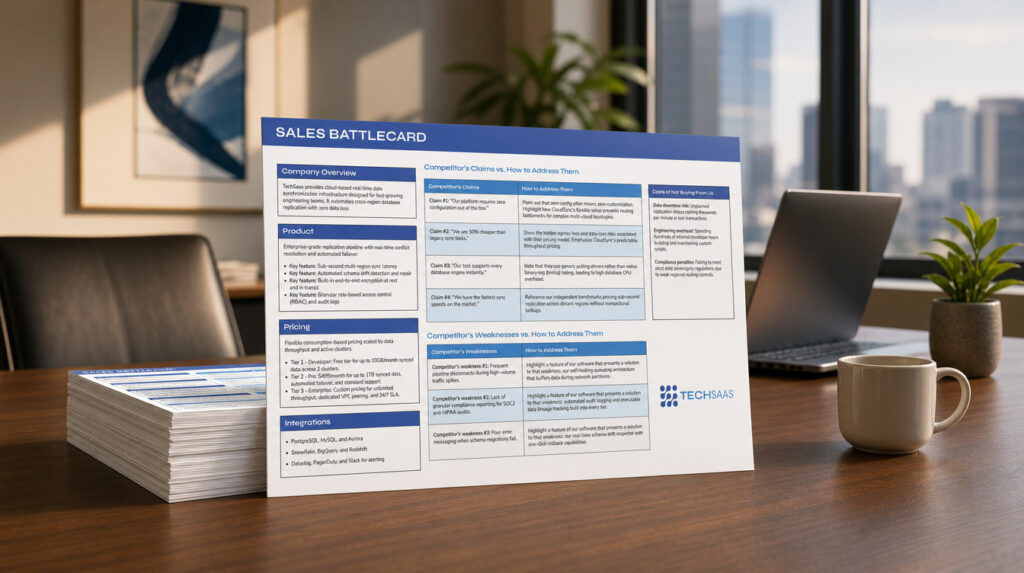
Sales Battlecards: Field-ready competitive context, without the overload
Concise, scannable cards that give reps the competitive context they need at exactly the moment they need it. Updated as the market shifts.
- Competitor positioning at a glance
- Trap-setting questions and proof points
- Pricing and packaging differentiation
- Common objections by competitor

Solution pitch modules: Structured pitch narratives by solution, segment, or use case
Modular pitch components your team can mix and match for the conversation in front of them — so every rep tells the same story, well.
- Segment-specific value propositions
- Use-case driven proof points
- Reusable presentation modules
- Demo flow scripts

Launch and training packs: Everything your team needs when a new offer hits market
Structured readiness programs with assessments and certifications confirm reps are ready before rollout, supported by continuous coaching through a hybrid learning model.
- Launch readiness checklists
- Online training modules and certifications
- Manager coaching guides
- Internal Q&A and FAQ assets
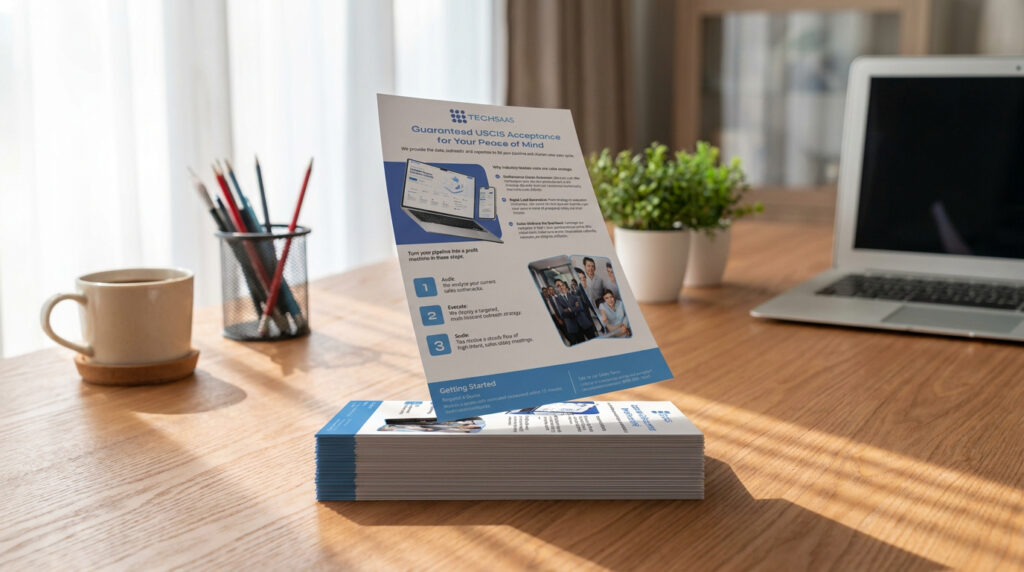
Customer-facing sales collateral: The same narrative, polished for the buyer's hands
What starts as internal enablement becomes a broader GTM asset engine. Customer-facing collateral inherits the structure of your internal playbooks, ensuring marketing and sales tell exactly the same story across the funnel.
- Solution brochures
- Online sales training modules
- Buyer-stage tailored deliverables
- Sales one-pagers
- Marketing content used across the funnel
- Consistent messaging assets for marketing teams

Set a strategic foundation with a comprehensive GTM Playbook
Sales enablement works best when it has something to build from. If your GTM strategy is already documented in a structured Playbook, the translation into sales tools is faster and more precise. If you’re still working through that layer, Filament’s GTM Playbook service runs upstream of enablement and establishes the positioning foundation your team needs. The two services can run sequentially or independently.
The outputs are designed to work together as a system. Consistent positioning across playbooks, battlecards, and pitch materials means your team delivers the same narrative, from first call to final presentation.
Enablement in Action
FUJIFILM CodeBlue NZ
Launching a new entry-tier Modern Workplace solution into a market already crowded with both premium and low-cost alternatives.
Case Study · Modern Workplace Launch
Equipping a national sales team to lead with value, not price
FUJIFILM CodeBlue needed to launch a new entry-tier Modern Workplace solution. The challenge wasn’t the product — it was equipping the sales team (sales reps, sales managers, and the sales enablement manager) to lead value-based conversations instead of defaulting to price. Filament built the structured system to make that possible.

The Challenge
Three competing pressures
- Launch a new entry-tier Modern Workplace solution
- Differentiate against premium and low-cost competitors simultaneously
- Equip sales reps to lead with value, not price
What Filament Delivered
A complete enablement system
- A structured Sales Playbook covering targeting, outreach templates, conversation scripts, objection handling, and a tier positioning framework
- A competitive battlecard
- Pitch deck solution slides
- A customer-facing solution brochure
The Outcome
A repeatable national sales motion
- Clear positioning across all three solution tiers
- Structured conversations aligned to specific target segments
- Faster internal alignment across national sales teams
- A repeatable sales motion for the SMB segment
Why Filament:
We've sold what you're selling
Most marketing agencies understand content. Filament’s team includes sales enablement professionals with hands-on experience in sales operations and a genuine sales background, meaning we understand how B2B tech deals actually work because we’ve operated inside the vendor ecosystems our clients are navigating.
That distinction matters in sales enablement. A playbook built by someone who has never been inside a channel sales motion or a multi-tier vendor negotiation looks very different to one built by people who have.
This is also why sales enablement matters so much in complex B2B environments. Forrester and the Sales Enablement Society found 75% of B2B sales organisations now have a dedicated sales enablement function and that number is expected to keep growing.

of B2B sales organisations now have a dedicated sales enablement function and growing
Source: Forrester & Sales Enablement Society, B2B Sales Enablement Research
Ready to turn your GTM strategy into sales results?
If your sales reps are improvising the positioning you worked hard to build, that’s a solvable problem.
Let’s look at where the gaps are and what a structured enablement system would actually fix. Companies that embrace sales enablement report win rates of up to 49% on forecasted deals.
Get in touch today.
Sales Enablement Frequently Asked Questions
Everything your team needs when a new offer hits market
Sales enablement is the process of equipping sales teams with the training, tools, and content they need to effectively engage customers and close deals throughout the buying journey.
It creates alignment across sales, marketing, and training teams, ensuring everyone works towards the same goals using shared insights and performance data.
Why is sales and marketing alignment so important?
Despite best efforts to improve, sales and marketing still tend to work in silos, which leads to inefficiencies and missed opportunities in the sales process.
Effective enablement starts with breaking down silos between departments. A strong sales enablement strategy aligns sales, marketing, and customer-facing teams around shared goals, measurable KPIs, and buyer-focused content to improve performance and revenue outcomes.
How do you measure sales enablement?
Establish common objectives using shared KPIs like cost per opportunity or marketing ROI to ensure teams work toward the same revenue targets.
According to the Sales Enablement Collective, important KPIs include conversion rate, average deal size, number of opportunities created, number of meetings set, length of the sales cycle, and how often sales staff meet quotas.
Objective data such as ‘time to productivity’ for new hires and seller engagement with new assets can indicate the effectiveness of enablement strategies.