Proofpoint Co-Funded Cybersecurity GTM Campaign Takes Nexon’s Phishing Assessments to Mid-Market Australia
In early 2020, Nexon Asia Pacific acquired Kiandra IT and, with it, a certified security team that tests organisations the way attackers do. Nexon needed to take that capability to its existing customers at a time when phishing and ransomware attacks on Australian organisations were rising.
This is the cybersecurity go-to-market campaign we planned and wrote for Nexon in 2020, co-funded by Proofpoint.
About Nexon Asia Pacific
Nexon Asia Pacific is an Australian IT solutions and managed services provider. It advises on, implements and manages technology across cloud, data and AI, unified communications, networks, digital solutions and cyber security.
Its cyber security practice covers advisory, penetration testing, Essential Eight assessments, cyber awareness training and a 24/7 Australia-based Security Operations Centre.
Nexon serves mid-market and government organisations, with a focus on regulated sectors including healthcare, financial services, public sector, not-for-profit and higher education. It supports more than 1,000 organisations.

Industry: IT Services & Cybersecurity
Type: Managed Service Provider (MSP)
Offering: Managed cyber security, security assessments and penetration testing, cloud, networks and unified communications
Target Market: Mid-market organisations with 100 to 1,000 employees, plus government, healthcare, education and not-for-profit
Security Vendor Channels: Armis, Check Point, Cisco, Crowdstrike, F5, Forcepoint, HPE Aruba Networking, Microsoft, Palo Alto Networks, Proofpoint, SentinelOne, Tenable, Carbon Black (Broadcom)
Filament Services Used:
- Go-to-Market Strategy
- Content Marketing
- Partner Marketing
Filament Solutions Used:
The Challenge: Taking a newly acquired security capability to an existing customer base
The Kiandra IT acquisition gave Nexon a security team holding CREST, OSCP and ISO certifications, and a set of social engineering assessments that test how staff respond to phishing. Nexon’s customers knew Nexon for IT services. Few knew it now tested defences from the attacker’s side.
Phishing was already common. Proofpoint’s 2020 State of the Phish report found that 54 per cent of surveyed Australian organisations experienced a successful phishing attack in 2019. COVID-19 then moved staff onto home networks and personal devices, and the Australian Cyber Security Centre reported a steady flow of pandemic-themed scams. Ransomware hit Toll Group twice in the first half of 2020.
Customers knew attacks were a threat. What most of them lacked was a clear picture of what an attack looks like and what to do about one.
The audience also split in two. IT managers needed to assess threats and make the case for action. Executives needed to understand the risk well enough to approve it. Nexon needed one campaign that educated both, then moved them to book an assessment.

The Engagement: A Veeam introduction that made Filament Nexon’s go-to-market agency
The relationship started in 2018. Nexon had acquired Cavalry IT and needed to bring its data protection services to market under the Nexon brand. Veeam, the vendor behind those services, introduced Nexon to Filament (called Volt Lab at the time).
By 2020, Filament was Nexon’s go-to-market agency and for any GTM campaigns, turned to the team who already knew its customers and how it sold to them.
Proofpoint co-funded the campaign. So the plan had three parties in it: Nexon’s new security team, Proofpoint with its email security and awareness training, and Filament on planning and copy. The Proofpoint Essentials trial and Proofpoint’s training programmes became part of the funnel. Filament’s scope was planning and copy, while Nexon’s in-house designer produced the layouts.
The Solution: A phishing-led campaign with separate buyer's journeys for IT and executives
Filament planned the campaign and wrote every asset across six deliverables. The plan ran from awareness through to an assessment offer and a nurture path, built around phishing as the attack type customers would recognise first. Nexon, Proofpoint and Filament shaped the funnel together, including the split audience tracks and the final offer structure.
Campaign architecture
After the awareness phase, the campaign split into two tracks. IT managers received the technical case for a social engineering assessment. Executives received the business case: impact on the organisation, what the investment buys and how the options compare. An A/B test on the first email compared a blog-led message against an infographic-led one.
Offer and landing page
The landing page introduced Nexon’s Social Engineering assessment programme in three fixed-price tiers: a global campaign across all users, a targeted campaign to test network entry, and a combined option. The original brief asked for two offers; the campaign went live with three.
Content assets
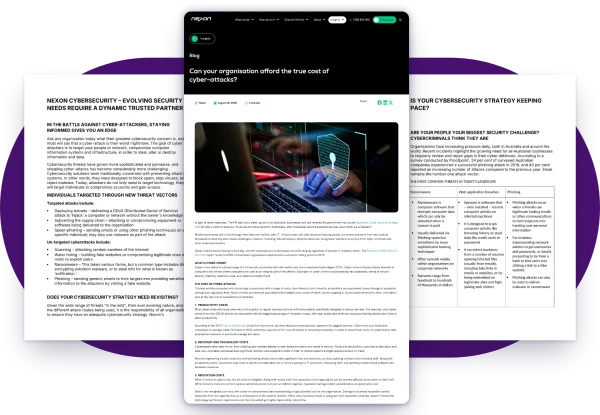
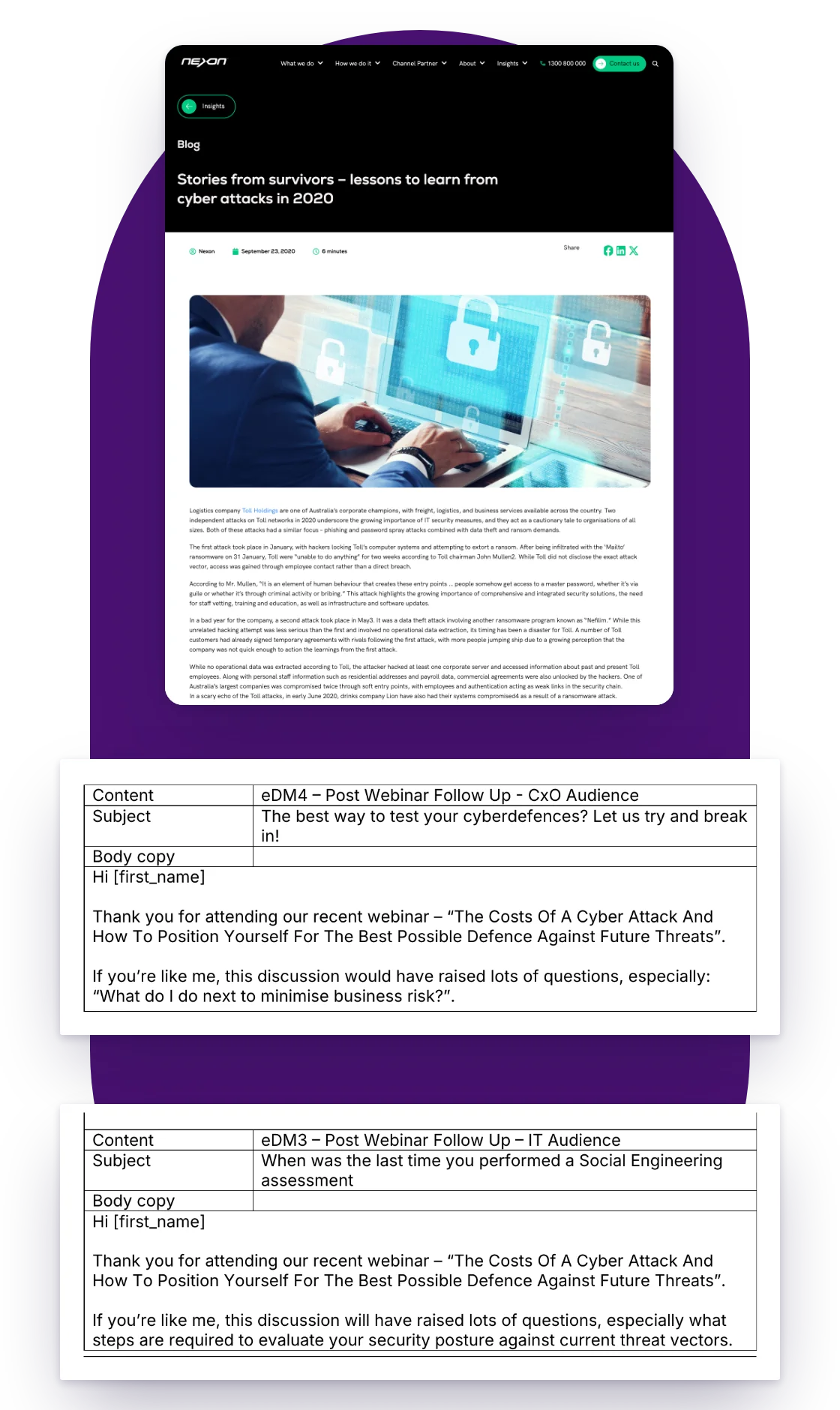
A four-page solution brochure covered phishing, business email compromise and Nexon’s approach across pre-emptive, preventative and detect-and-react measures. “11 alarming facts about cybersecurity you need to know” gave Nexon an infographic for its blog, LinkedIn and SlideShare, built to re-engage people who dropped out of the funnel. Two blog posts carried the awareness phase: “Can your organisation afford the true cost of cyber-attacks?” and “Stories from survivors – lessons to learn from cyber attacks in 2020”.
Email sequence
Seven eDMs moved contacts through the funnel: an A/B pair for awareness, an invitation to a joint Nexon and Proofpoint education session, separate follow-ups for the IT and executive tracks, a nurture email for contacts who did not act after the Proofpoint Essentials trial, and a second-wave nurture email promoting the survivors blog post.
The Benefit: Separate targeting for the person who assesses risk and the person who signs off
Nexon could take a single security offer to two buyers in the same organisation without diluting it for either. IT managers got the attack patterns and what each assessment would test. Executives got the cost of an attack and what the assessment fee would buy.
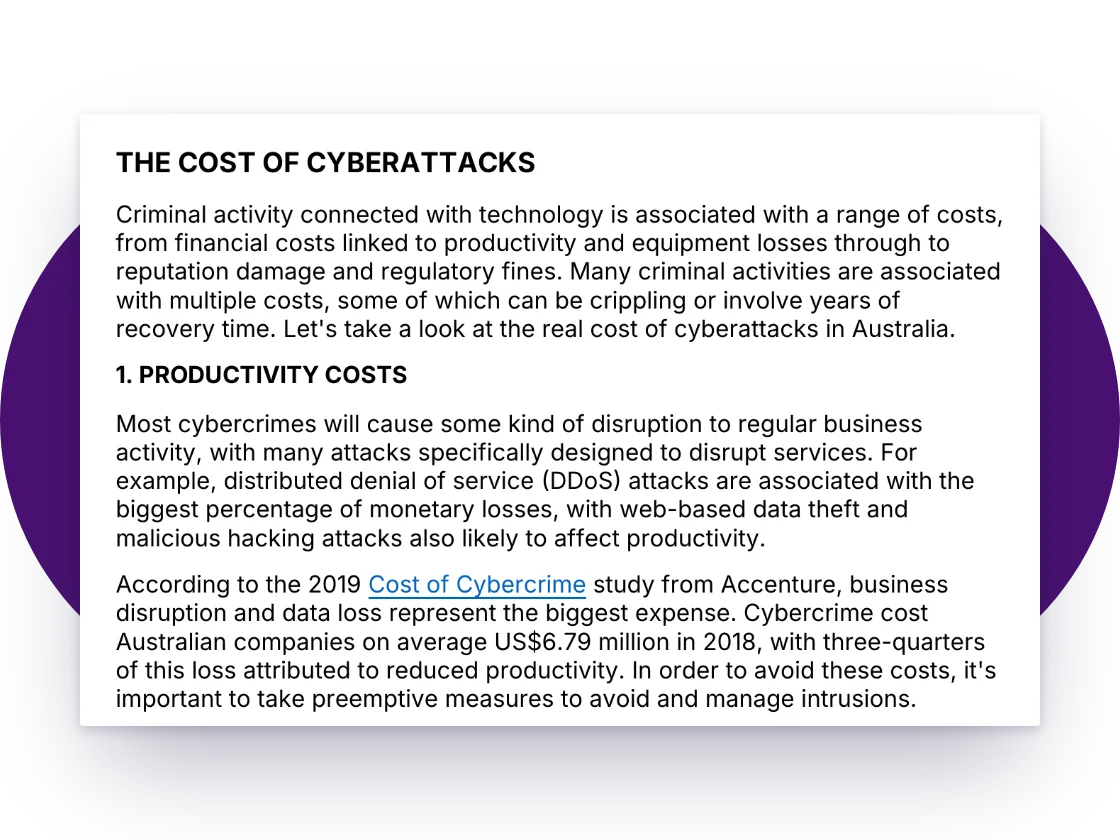
The first blog post shows how that worked. “Can your organisation afford the true cost of cyber-attacks?” broke the cost of an attack into four categories: productivity, recovery, reputation and compliance. That gave an IT manager language to take to the executive team, and gave the executive a framework to weigh an assessment fee against.
The campaign also gave Nexon a structure it could run again: vendor co-funding, its own 2019 testing data from Kiandra as proof, a priced entry offer, and a nurture path for contacts who weren’t ready to buy.
The Result: Evergreen assets that outlasted the campaign and a relationship that kept growing
Nexon took its new security capability to market in the second half of 2020, with Proofpoint as a funding partner. Nexon didn’t share campaign metrics with us, so everything below is something you can check yourself.
- Vendor co-funding: Proofpoint co-funded the campaign. The cost-of-attacks blog post, published on 26 August 2020, still carries the line “In partnership with Proofpoint”.
- Content still live: Both blog posts remain published on nexon.com.au six years later, after Nexon’s website refresh.
- Relationship growth: Between 2018 and 2022, Filament delivered around 12 projects and campaigns for Nexon, starting from a single Veeam introduction.
Are you looking to take a cybersecurity product or service to market?
Filament plans and runs vendor co-funded go-to-market campaigns for MSPs and cybersecurity providers, from the evidence base through to lead capture. Talk to us about cybersecurity marketing, or read our guide to accessing Market Development Funds.